
Finding Strength When Motherhood Takes an Unexpected Turn
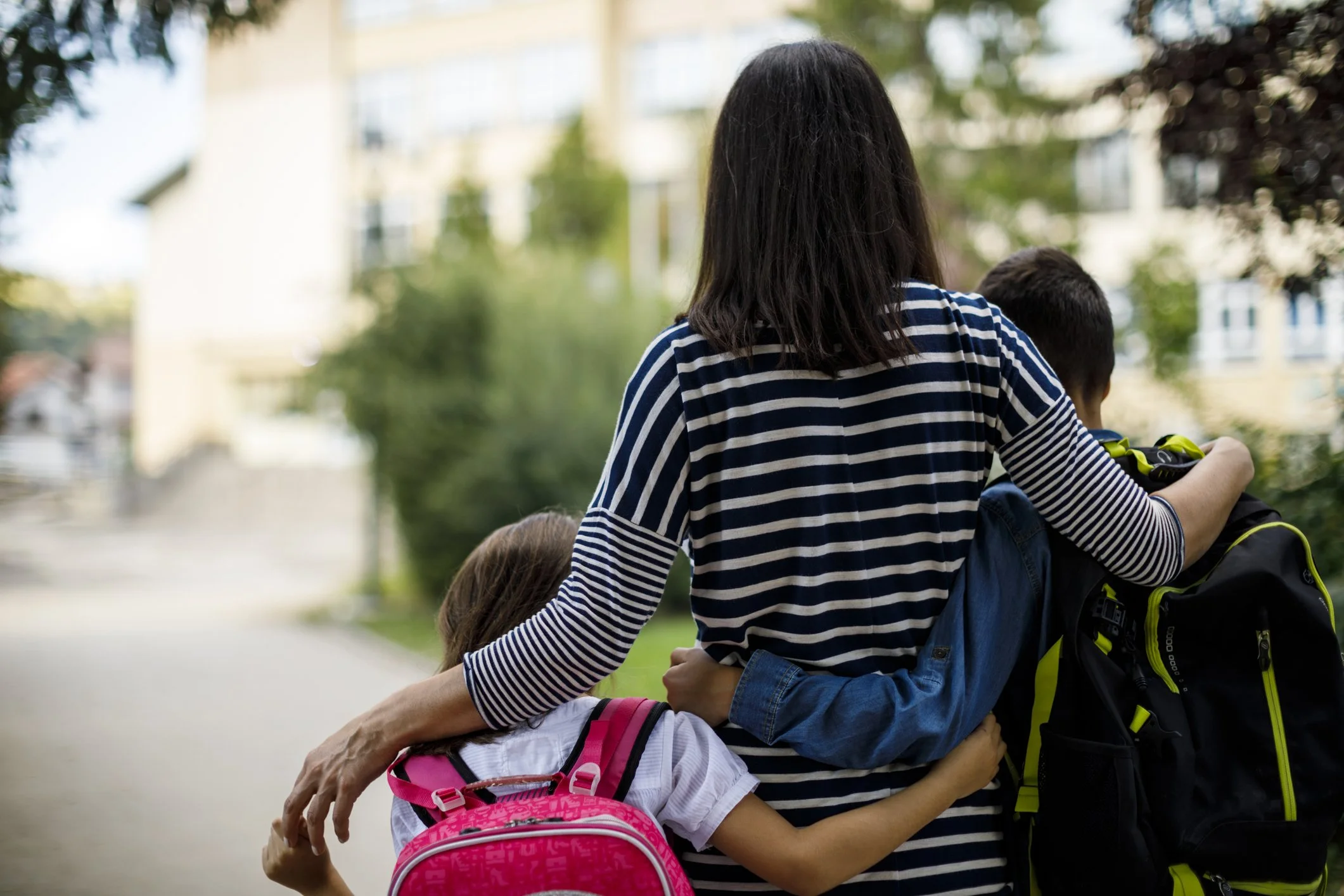
We all start parenthood this way: With the universal assumption that if we plan enough, love enough, stay vigilant enough, then maybe just maybe we’ll be able to keep the bad things away from our kids. I know this is a universal truth, because this is what I thought when I gave birth to my first beautiful baby girl, and I hear it all the time. The moms who say, “I just want to keep them innocent for as long as possible,” or “they really don’t need to know how harsh the world is.”
And I get it. I wish that we could keep our kids in a special little “protection bubble” where they see no evil, experience no hardship, and skate through their childhood without a single hitch. But what happens when life shows up with its own plan?
When I was diagnosed with cancer, as a mother, my first thought was, “Oh my god, how are we going to hide this from the kids?” But here’s the thing. As a mother (or parent), you cannot control the unexpected. Believe me, I’ve tried. The best thing you can do to set yourself up as a parent for coping with the real reality of life, and set your children up to handle adversity and build resilience, is to accept a hard, hard truth: Motherhood (or Parenthood) is not at all about creating a picture-perfect childhood for your children. And you are not failing if the unexpected has stomped into your life and derailed your perfect parenting plans. The best parent you can be is the one who embraces that learning how to move through challenges and the unexpected is the most important gift you can give yourself and your children.
Here’s what I’ve learned and put into practice as a mother: life threw me some major curveballs as a parent, forcing me to rethink everything I thought I knew and thought I could control.
The Lie We Secretly Believe as Mothers
In case you haven’t already discovered, or in the event that you’re holding on for dear life to the lie that, “if I do everything right, nothing bad or challenging will happen to my kids,” let me be have the honor of being the first to tell you that you can do everything “right.” You and your kids will still face incredibly hard things in life.
There is an endless stream of cultural pressure and generational expectations placed on mothers in particular to be the ultimate protectors and emotional shock absorbers for their children. And regardless of the outside pressures, if you’re like me, you want and feel an instinctual need to protect your kiddos at all costs. Am I right?
In an age where parenting advice comes at us from all angles, whether it be social media, blogs, or books, it’s easy to get swept up in this false expectation of ourselves as parents and forget that even if your kids skate through their childhood without a single hardship or challenge, they will encounter adversity and pain as adults.
So you need to ask yourself, by trying to over-protect them, am I really setting them up to be resilient adults?
Here’s the thing: I am not saying you should ignore your children’s feelings or tell them to “buck up” when they’re upset. I am definitely not suggesting that you should ignore potential threats to your children or family.
But, do you really think that your kids will be more protected with less information, less truth, and less opportunity to learn to navigate the hard stuff? There are things that you can protect against and avoid with open and honest communication. And the beauty of this approach is that, when the proverbial sh*t hits the fan, you are more likely to give your kids the open, honest support they need.
When the Unexpected Shows Up at Your Door
Small personal reflection woven in about navigating motherhood while dealing with a health diagnosis, focusing on perspective rather than details.
I wish I could say that being diagnosed with cancer was the first hardship or trauma that my family and my children have been forced to navigate. But the reality is that we went through an equally difficult and soul-crushing experience as a family well before my cancer diagnosis. I’m not ready to talk about the details of the traumatic life events that have affected my life and family in their entirety. For one, because I respect my children and want them to tell their own story someday when they are ready. But I will say that the unexpected can show up at your door as a parent at any time, and when it does, how are you going to handle it?
If you are already dealing with a life-shifting event, whether it be a family illness, crisis, loss, financial situation change, divorce, or mental health struggle, I just really want you to know, you are not alone, you are not failing, and your family will get through this. As you can see from the long, but not at all comprehensive list I just laid out, there are dozens of ways your family can be cruising along one day, and have a polar shift in your life the next. The truth is, though, that every family is different, but what’s a common thread for all of us is that at some point your family will encounter and be forced to deal with something they do not want, and didn’t plan for.
The Truth About Protecting Your Kids
Perhaps it’s time to shift from a “protection” mindset as a parent and focus instead on helping your children navigate an uncertain world and future without fear, so they can become resilient in the face of hardship.
I get it. It feels just wrong to assume that bad things happen and will happen to your family. Although if you’re reading this, you likely already know that the unexpected happens at some point, whether you painstakingly plan to avoid it or not. But trying to shield your kids from every hardship will eventually drive you crazy and, aside from that, will not give your children the tools they need to adequately navigate situations when “life” happens.
In this article from Brown University Health, The Seven Cs of Resilience and How Parents Can Raise Resilient Children, Kimberly LaFountain, LMHC, explains that “There are seven qualities that can help build resilience. By helping your child focus on those seven qualities, you can help your child become more flexible and more easily recover from life’s challenges.”
These seven qualities that build resilience include:
Building Competence by allowing children to make safe mistakes
Developing Confidence in the ability to make their own decisions
Fostering Connection to family, friends, and school
Encouraging Contribution to motivate and give children purpose
Teaching Coping strategies to navigate hard moments and avoid unsafe situations and people
Creating environments to learn Control, and focus on how our actions and choices can affect others and outcomes
Why Age Appropriate Honesty Matters
Have you ever heard the saying, “If you know better, do better”? I probably butchered it, and I'm sorry for that, but the point is that each generation learns and can improve how we operate as parents, and set our children up for success in life and in an uncertain world.
It’s an old and outdated model of parenting that assumes kids are too young, too vulnerable, and too fragile to be able to handle life’s hard stuff. The reality is that our kids often know more than we think they do, and aside from that, children are incredibly perceptive. When adults hide everything, what happens instead of preserving their youth is that their kids will fill in the gaps with their own fears instead.
You may not think of it this way, but you are essentially keeping secrets from your children when you try to shield them from life’s challenges or from things happening within the family. Psych Central shares some really valuable insights on why keeping family secrets could be harmful in this article.
Please know that I am not suggesting that you share every news story with your kids, or every gory detail about grandma’s cancer diagnosis. Still, it’s a proven fact (read this article for more) that children pick up on your stress; therefore, age-appropriate honesty really matters and will actually help them better navigate life with confidence in the future.
Here are a few simple rules my partner and I follow in terms of being honest with our kids:
Tell the truth in simple terms - You don’t need to get into every detail to share valuable and honest information with your kids.
Answer the questions they actually ask - If your kid is ready to ask the question, they are ready for an honest answer. But it doesn’t need to be riddled with unnecessary details. Just answer the question they are asking.
Avoid giving information they aren’t ready for yet - The nuances of sex, the potential outcomes of a cancer diagnosis, the details of how someone died; none of these need to be shared at the exact moment your child asks for clarity. If they are six, the answer can look a lot different than if they are sixteen.
Example: “I’m dealing with something hard right now, but we are going to get through it together.”
Reassure them about the things that remain stable - The big thing, I’ve discovered, and that’s also backed by research, is that no matter what’s going on, kids most desire reassurance that things in their life will be okay, and remain stable. Communicating this, along with the honest answer, is critical to helping your kids navigate challenges while still being kids.
What Kids Really Need When Life Gets Hard
So the real question is, what do kids really need during difficult times? The Way to Grow blog shares in their post What Children Need During Difficult Times that most of all, kids need emotional reassurance when life gets hard, and there are a few ways you can provide this as their parent, even if you’re in the midst of a crisis or unexpected life-changing event.
Create Stability Through Routines - One of the best ways to communicate that everything will be okay is to stick to a steady routine in your life. Whether this is making sure to go to soccer practice, even when it’s hard to get there, or sticking with a coffee date once a week, these routines mean more to your children’s mental health than you might realize.
Appropriate Emotional Honesty - Whatever it is you’re experiencing, whether it’s a flood of emotions around a diagnosis, or unexpected life change, or general uncertainty, I guarantee you, your kids can feel it. So instead of just saying, “everything is fine,” try something that allows you to be honest and connect with your kiddos, while still keeping in mind that you’re the adult, like, “Yes, I am okay, sweetie, but I’m just having a lot of emotions today. How are you feeling about everything?”
Give Permission to Ask Questions - If your response to your children’s questions about the unexpected is always short and closed-ended, the likelihood is that your child will stop asking questions, seek out the information elsewhere, or create their own story in their head, which could be worse. Instead of volunteering unnecessary information, ask, “What would you like to know?” or, “How can I help you through this?”
Reassurance That You (the Adult) Are in Charge - Multiple sources, including this blog, perfectionism from The Artful Parent, share that kids don’t need you to be perfect, or create a world of perfection around them; they just need to know that you’re in charge, and reassurance that you have their best interest at heart. The last thing any kid needs is to feel like they have to be the adult in a relationship with their parents, and you can help them feel safe and seen, even in the face of uncertainty.
Show Unconditional Love No Matter What - Going through life as an adult is not easy. But the love you show to your children does not need to change. Each of us is dealt a different hand, and there is inevitably a potpourri of good and bad in the hand that you’re living. That being said, there’s one thing you can guarantee your children, even if nothing else is steady, and even when the future feels bleak. You can guarantee that you will, and do love them unconditionally. Don’t assume “they just know,” and don’t “wait for the right moment,” to show them you care. At the end of the day, all kids are resilient, but research shows that kids who feel loved unconditionally are the most stable and prepared for the unexpected.
The Unexpected Strength Motherhood Builds
Brief reflection on how facing something like cancer changes perspective on small things without letting it dominate the piece.
Let me tell you one core truth I’ve learned through navigating a stage four cancer diagnosis, and subsequent treatment as a mom: the hard seasons have a way of reshaping us as parents, in ways we never expected. And while I’m not happy that my body developed cancer, and that my family has been forced to navigate this incredibly uncertain and challenging period of time, the lessons I have learned through this experience, and the strength we have all gained as a family from walking head-on into the face of uncertainty, have been invaluable and incredibly enlightening.
There is a quiet power that comes out as a parent when you discover just how strong you need to be, and can be, even when you’re scared sh*tless. It’s in these moments that you are reshaped, and it’s in these times that your children learn how to deal with their own future challenges. So, if anything, your ability to show up, share, and be there, even when it’s hard, is the best thing you can do for your child as a parent.
The Takeaway Most Parenting Books Don’t Say Out Loud
Here are a few takeaways for you and your journey as a parent, in case nothing else in this post resonated with you.
One: Motherhood (Parenthood) isn’t about controlling the future or the present. None of us can do that.
Two: Accomplishment as a parent doesn’t look like raising kids in a dreamlike bubble; it means you have raised kids who can face the world without fear and know how to navigate the hard stuff.
Three: Kids don’t need life to be perfect to be happy and fulfilled. They just need you, your time, and your attention.
Four: The best and most beautiful thing in the world that you can give your kids is not perfection, it’s the ability to keep going when life gets messy, and the confidence to know it will all work out.
The Version of Motherhood No One Warns You About
The parts of parenting that no one warns you about are the sticky parts, the uninvited parts, the “I didn’t ask for this,” or “I didn’t plan on this” parts. Probably, if we knew the potential and unpredictability of life before having kids, we would be way more hesitant to have them at all, am I right? And, even with all of the knowledge I now have, and the unexpected that life has thrust in my path as a parent, I wouldn’t give back my motherhood. I don’t regret having children for one moment, and I am so grateful for the parenting journey I’ve been fortunate enough to be gifted.
What I hope you walk away with is this: While there are many important moments and things we hope to impart on our children and give them in life, perhaps the most important thing we can show our children is how to show up, even when things get hard. We can show them how to embrace uncertainty rather than avoid the hard stuff. And, we can give our children the gift of teaching them to stand back up even in the most difficult moments of their lives. What a gift.
No matter what you are going through right now, I want you to know that you are not alone. I see you. I feel your struggles, pain, and hope. I’m rooting for you as a parent and person.
Much love,
Lis